Ionio — Manufacturing Hero

Manufacturing

Ionio is an AI transformation partner for manufacturers. We work alongside your team to find what’s quietly holding the operation back, then design and build the AI and technical capability that fixes it.

Ionio — Manufacturing · Philosophy
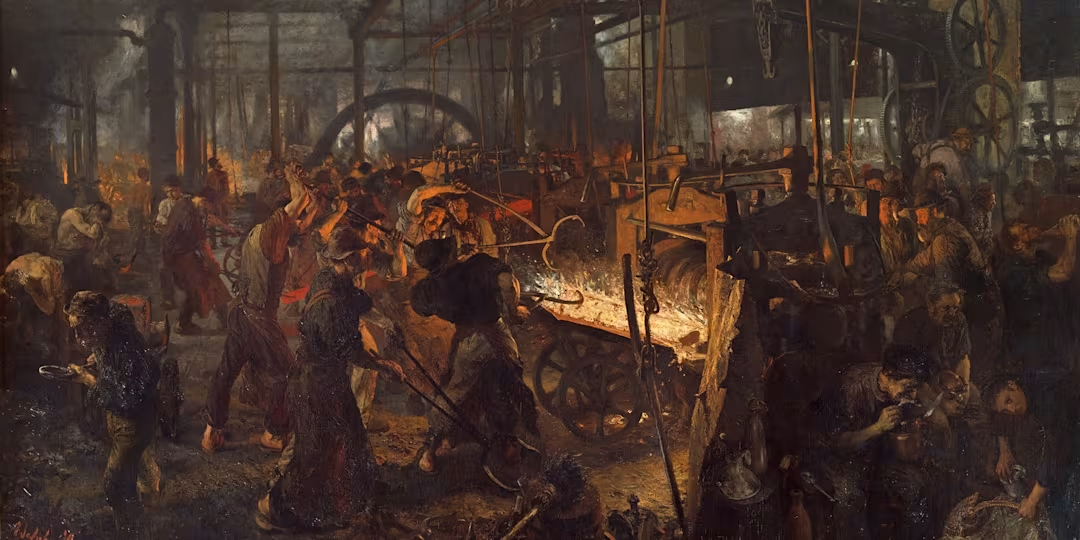
Adolph Menzel, The Iron Rolling Mill, 1875

Adolph Menzel · The Iron Rolling Mill · 1875

AI in Manufacturing

The most valuable AI is the least visible.

Ask most people about AI in manufacturing and they picture the floor. Robots, cameras, a lights-out plant. That work is real, but it is rarely where the time and money go. The cost is upstairs, in the quoting, the planning, and the decisions that still run on one senior person and a spreadsheet.

That is the work AI is getting good at. Reading a spec, pricing a job from history, planning around the capacity you actually have, answering questions that used to need thirty years on the floor. The manufacturers pulling ahead are building it into those steps, so the operation stops depending on who is in the room.

Ionio — Manufacturing · The Slowest Step

Where operations break

Your whole operation moves at the speed of one step.

An operation runs like a line. Every job moves through it one stage at a time, and the line only goes as fast as its slowest one. That stage is almost never the one you would expect, and until it clears, nothing behind it can move.

QUOTE PLAN MAKE APPROVE SHIP

We start by finding that one step. Then we build the fix that gets it moving again.

Ionio — Manufacturing · The Six Solutions

Solutions

Custom software, built around how your operation already works.

These came out of our engagements with manufacturers. Nothing here is software you log into. Each one gets rebuilt on your own parts, routings and job history.

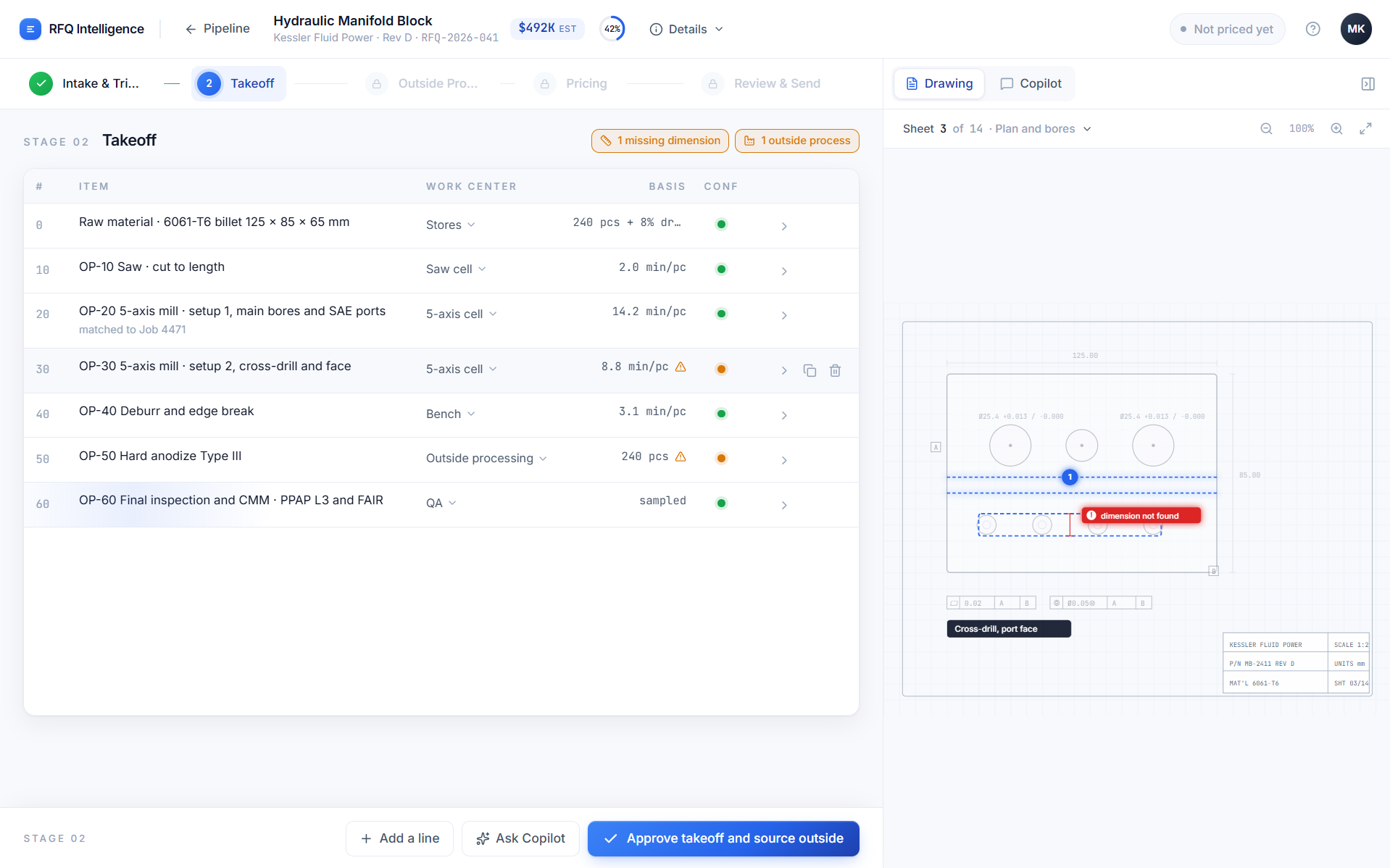
RFQ Intelligence takeoff screen

Estimating

RFQ Intelligence

An RFQ lands with prints, specs and a due date, and your best estimator disappears into it for two days. This reads the whole package, pulls out every part, and prices each one against jobs you have already run, at your work centers and your cycle times. The estimator checks the number instead of building it.

Quotes go out in hours.

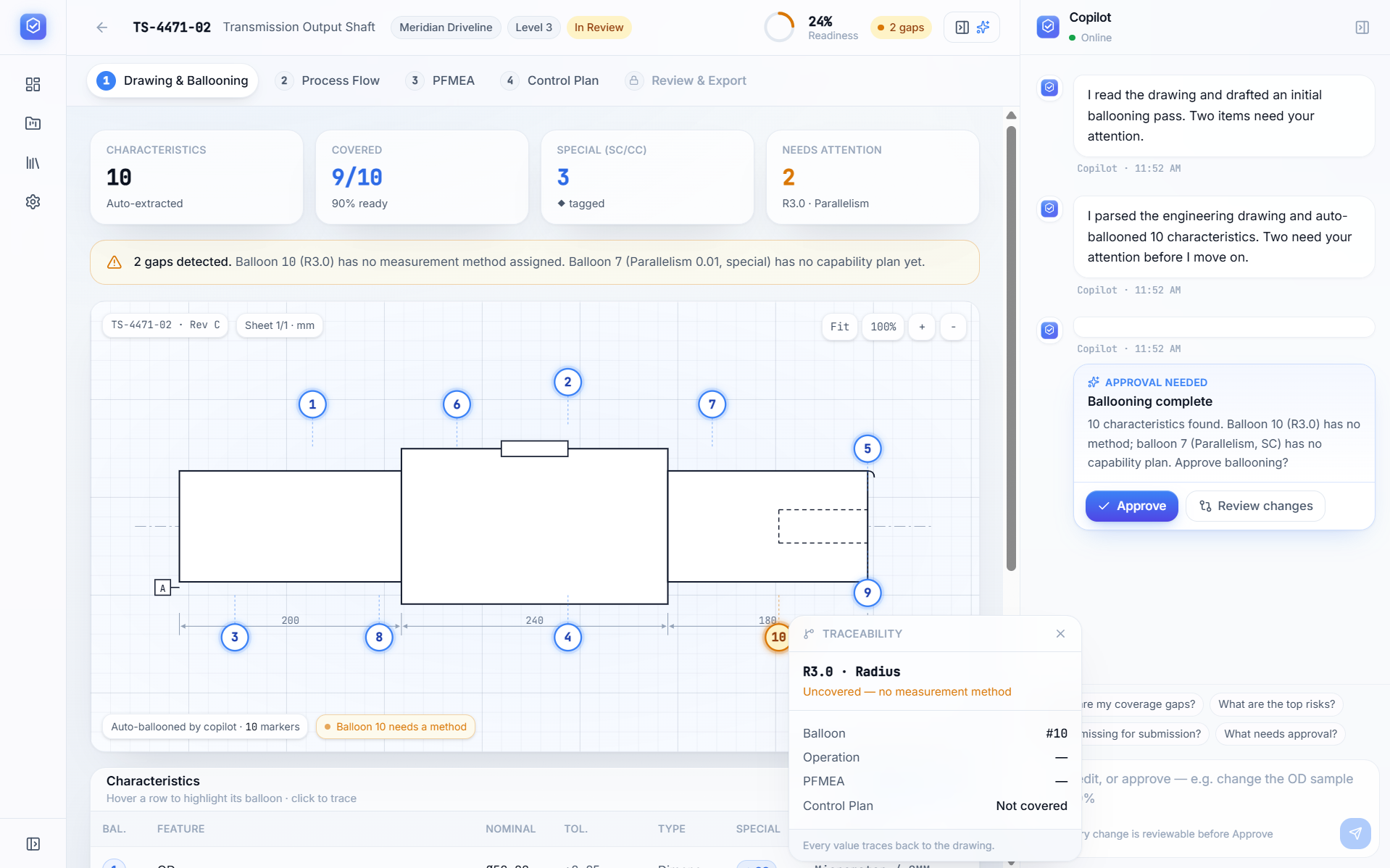
PPAP Copilot ballooned drawing screen

Quality

PPAP Copilot

A submission is four documents that all have to tell the same story about the same characteristic, and roughly 60% of rejections happen because one of them quietly does not. This balloons the drawing, drafts the PFMEA and the control plan off your own defect history, then runs the customer’s trace before the customer gets to. Your engineer approves every step.

Submission ready in a day.

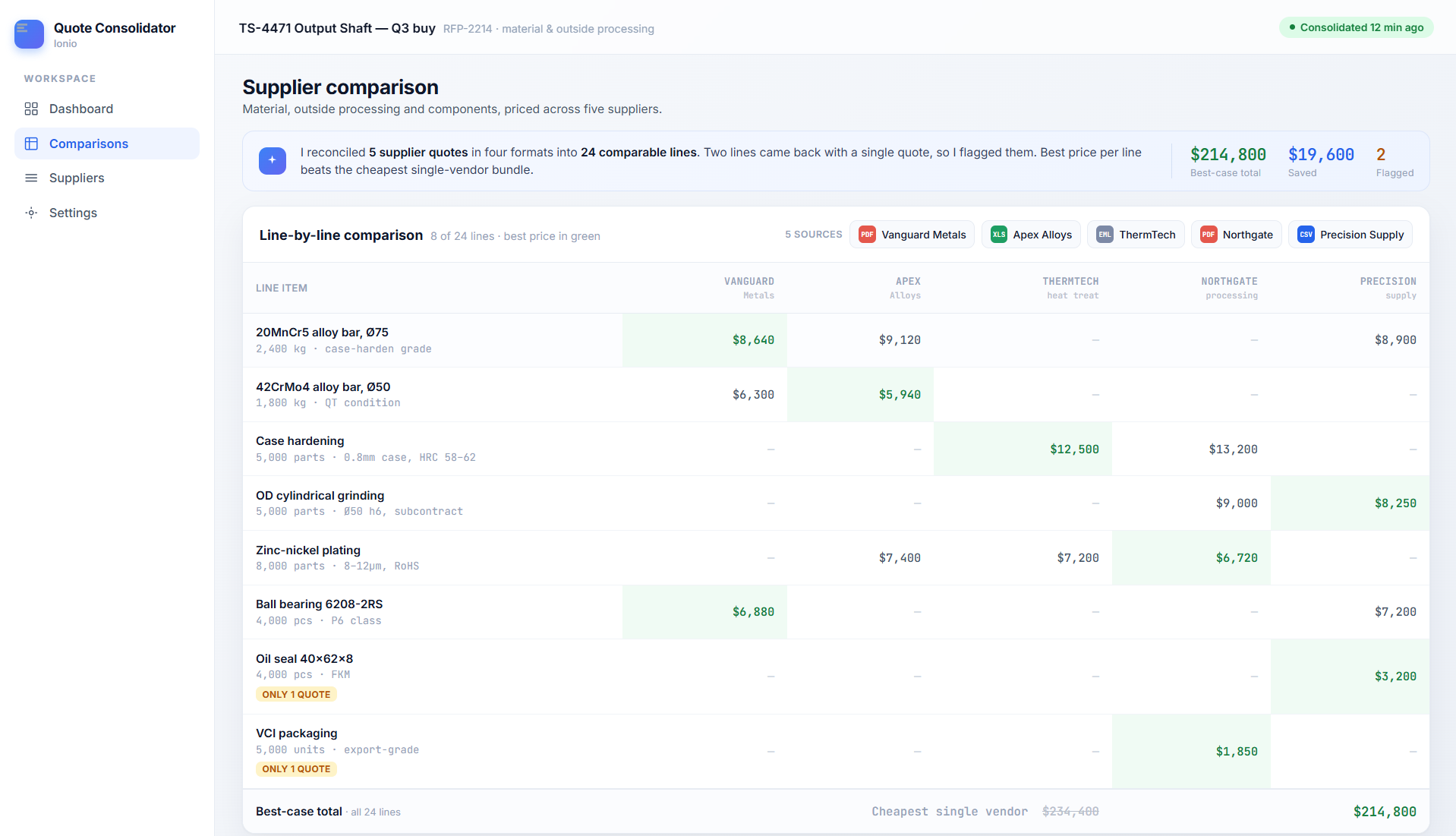
Supplier Quote Consolidator comparison table

Sourcing

Supplier Quote Consolidator

You send one package out for bar stock, castings, heat treat, grinding and plating, and six suppliers answer in six different shapes. Somebody rebuilds all of it into a spreadsheet by hand and hopes nothing slipped. This reads whatever they send, lines it up item by item, flags the best price on every line, and calls out the lines only one supplier bothered to quote.

One comparison sheet you can trust.

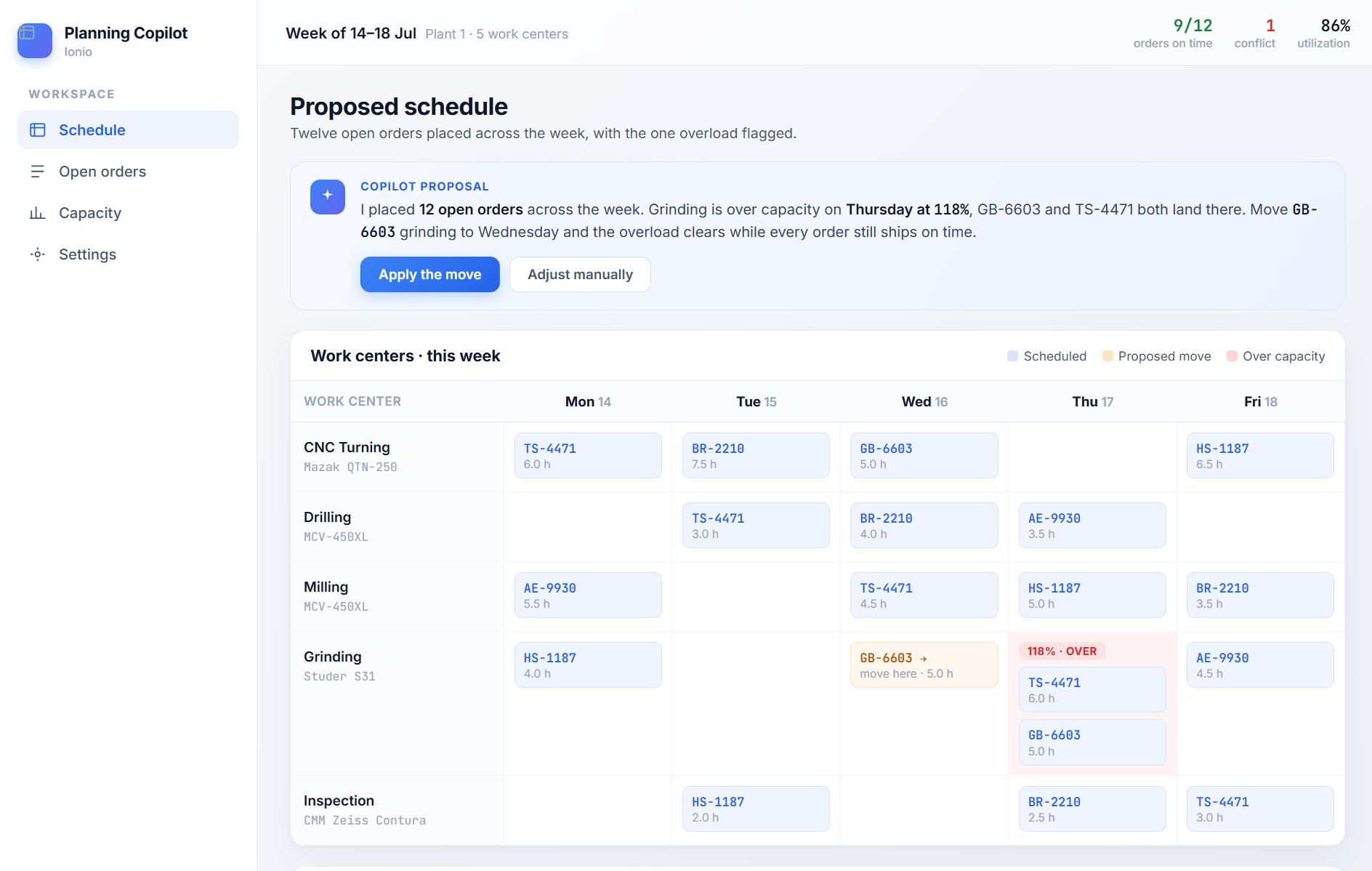
Production Planning Copilot week view with a flagged capacity conflict

Planning

Production Planning Copilot

The schedule lives in one spreadsheet and one person’s head, so every promise date is a guess until they are back at their desk. Give this the open orders and the capacity you actually have, and it lays out the week, shows you where two jobs collide on the same machine, and tells you whether Thursday holds.

You can promise a date on the call.

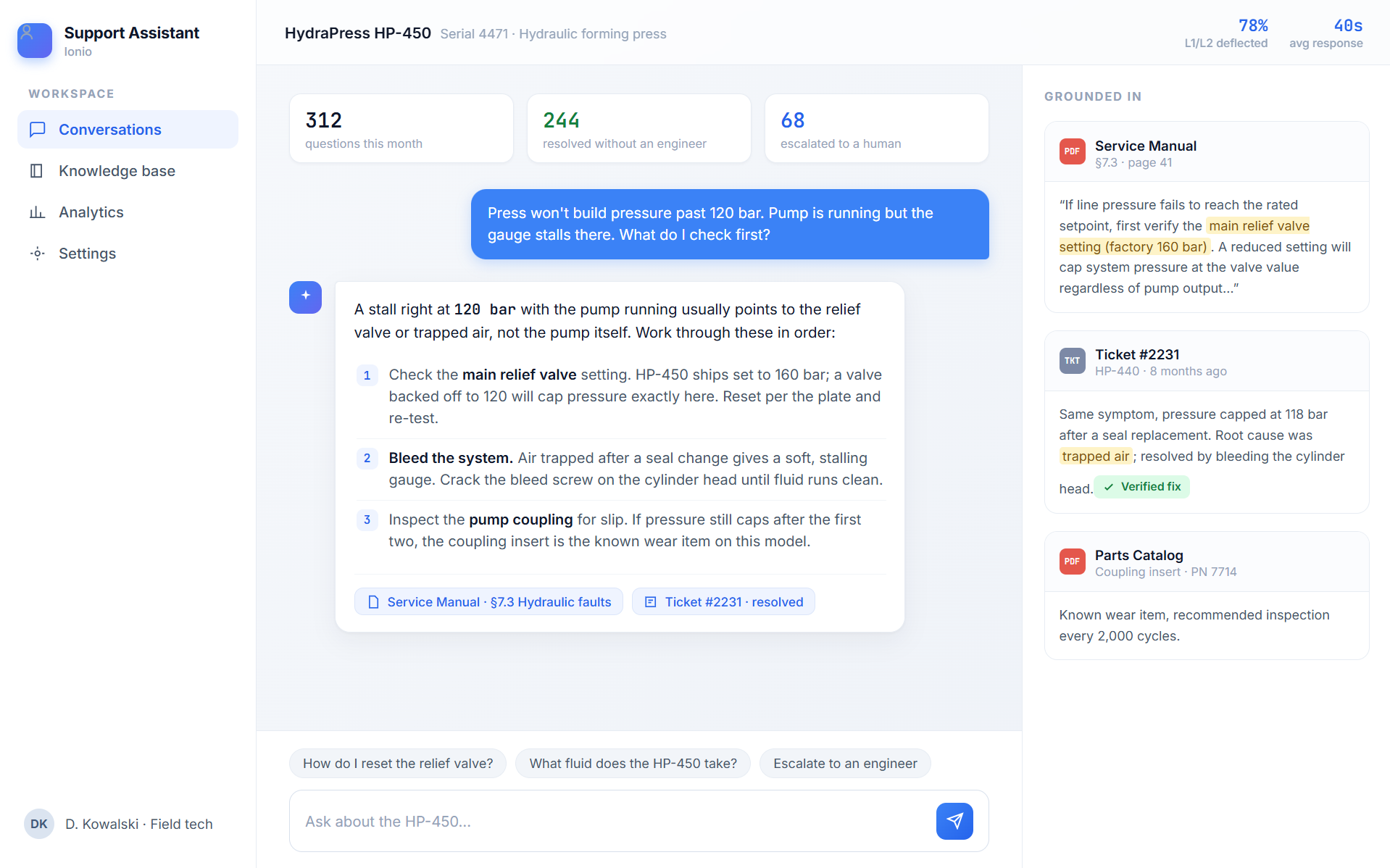
Equipment Support Assistant answering a technician with cited sources

Service

Equipment Support Assistant

Your installed base calls in with the same questions, and the answers sit buried in service manuals and ten years of closed tickets. This reads all of it and answers the technician straight, with the manual section and the old ticket it pulled from sitting right next to the answer. Anything it has not seen before goes to a person.

The basics stop reaching your team.

AI Transformation Audit and Enablement

The engagement

AI Transformation Audit & Enablement

We map how work moves through your operation and find the step everything else is waiting on. Then we build the fix, pulling from what is already above and writing what does not exist yet. Your team learns to run it and extend it, so the capability stays in the building after we go.

Built out of the five above.

If one of these sounds like your operation, or your problem is not on this list, book a call and we will tell you straight.

Book a Call
Ionio — Manufacturing · How We Work

How we work

Every custom solution we build starts the same way.

The building blocks already exist. Everything on top of them gets built for your process, your records and your people.

Step one

We learn how the work moves

We sit with your team and follow one job from the enquiry to the dock. We watch how you quote, how you plan, and where the work sits waiting. Most of what slows an operation down never shows up on a dashboard.

Step two

We take in everything you already know

Your job history, your prints, your routings, your costing sheets and the notes nobody ever cleaned up. All of it goes in. That record is the reason the software can price and plan the way your best people already do.

Step three

We build your custom solution

Most of the hard engineering is done before we meet you. The rest gets built around what the first two steps taught us. It runs on your parts, your routings and your words, it does the step the way your team does it, and it keeps working without anyone driving it.

Ionio — Manufacturing · Insights
Ionio — Manufacturing · Who It's For

Who it's for

Most manufacturers are living in the first column.

None of it is a failure of your people. It is what happens when the work that sets your margins runs on one person, a spreadsheet and a very good memory. The second column is the same operation with that step built properly.

As it runs today

Nothing here is broken. It is just slow.

An RFQ lands and your best estimator disappears into it for two days. Some packages never get answered at all, and nobody counts those.

A submission bounces on a mismatch that was never a quality problem. The launch slips, the expediting starts, and it comes out of margin.

The schedule, the pricing and the answers live in two or three heads. When those people are on the floor, everything behind them waits.

Years of closed jobs and old packages sit in folders nobody opens. The answer already exists in your building and nobody can reach it.

Once we are done

Same people. Same operation.

Quotes go out in hours, priced from jobs you have already run. Every package that arrives gets an answer, including the ones you used to let go.

The customer's trace runs in your building before the package leaves it. What used to bounce four weeks later is a flag you clear on a Tuesday.

The judgment is written down and it sharpens with every job. Your people approve the work instead of producing it, and the work no longer waits on them.

That history becomes the software. It prices, plans and answers the way your best people already do, on your parts and in your words.

The first column costs you money every week that it stays true.

Ionio — Manufacturing · FAQ

Common FAQs

Questions we get asked.

Straight answers to the things that come up most.

What do you actually need from us to start?

Time with the people who do the work, and the records sitting behind them. Past quotes and closed jobs, old submissions, routings, service manuals, whatever your ERP is holding. If it exists, we can use it. If it does not exist, we tell you that early rather than three months in.

Our records are a mess. Is that a problem?

It is the normal case, and it is usually the reason a person is still doing the job by hand. Nothing needs to be cleaned up before we start. Reading messy records is most of what the software does, and a tidy folder was never the thing standing between you and a faster quote.

Is there a human in the loop?

Yes, at every stage. The software drafts and a person approves before anything moves forward. Every value can be traced back to the place it came from, whether that is a line on a print or a job you closed two years ago, so the person signing knows exactly what they are signing.

Do we have to change our ERP?

No. We read from what you already run. Nothing gets ripped out, nobody has to learn a new system to keep doing their job, and the software fits around the way work already moves rather than the other way round.

How do we know it will price the way we price, before we commit?

Before you commit to a build, we take a sample of your past parts and show you that the model reproduces the quotes you actually sent. You judge it against jobs where you already know the answer. If it cannot do that, there is no reason for either of us to go further.

How long does it take to set up?

It depends on your process, but most of our engagements run two to three weeks. In that time we learn how the work actually moves, take in your records, and implement it in the software. After that it keeps learning from the work your team does, and if something breaks we are there to fix it.

What if what we need is not one of the solutions you have already built?

Then we build it. Every solution listed above started as one manufacturer's problem that nothing on the market solved. We map the process, take in your records, and build around what we find. The building blocks make it faster, and the problem does not have to be one we have seen before.

Ionio — Manufacturing · Final CTA

The next step

Bring a problem, or a solution you already want.

Some arrive knowing which solution they want to see running on their own data. Others only know that something takes too long. Either way you leave with a clear read on what to build and what it is worth.

Book a call
  • Thirty minutes
  • See any solution live
  • A straight answer