
Industries
Two Live · More Coming
Coming SoonEducation
Solutions
ServicesSolutions
Case Studies
35+ Projects Delivered
Research
Technical Articles · 100+ PostsWhite Papers
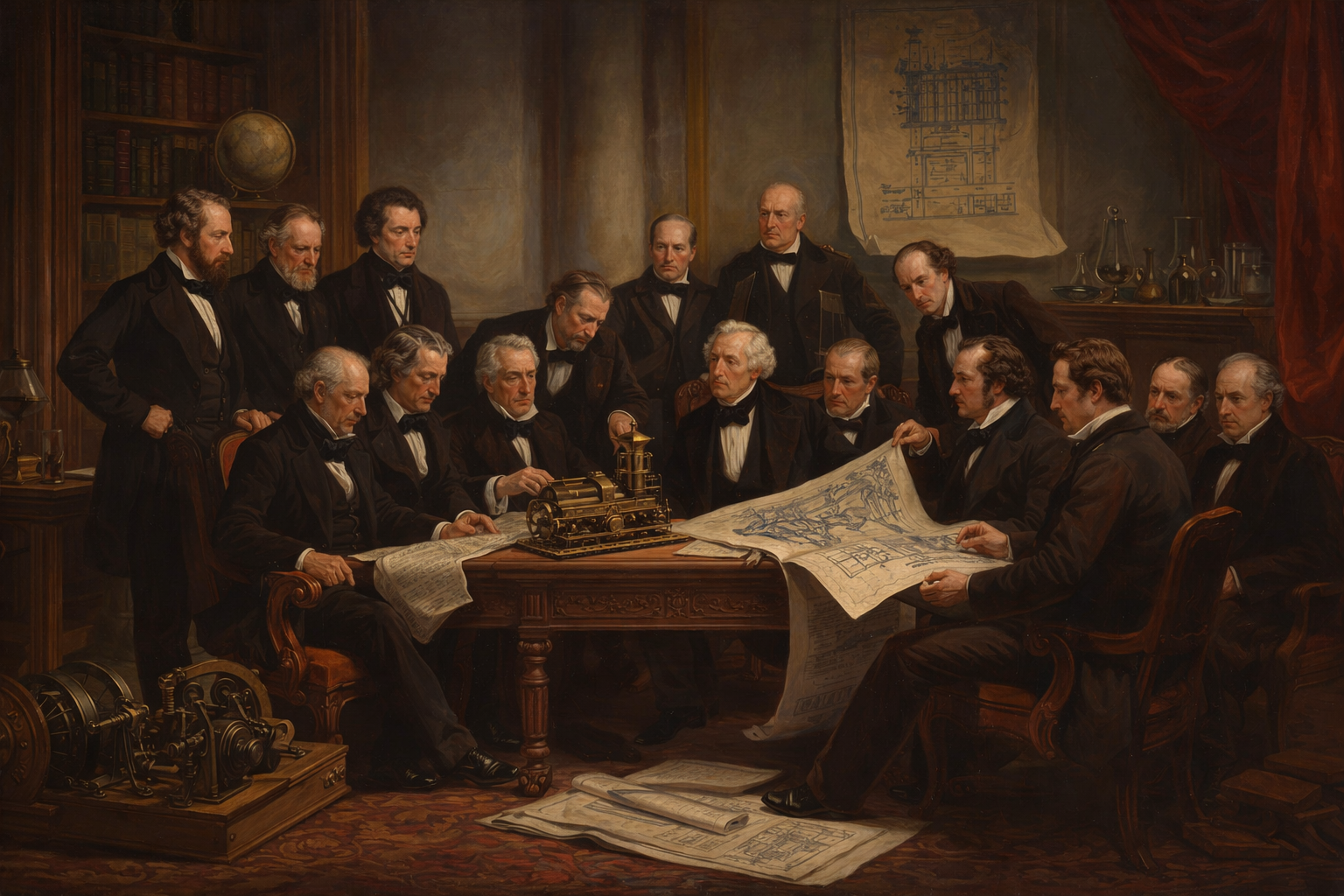
Where AI Meets Your Customer Before You Do
An Ionio Strategic Briefing for Retail & E-Commerce SaaS Leaders
I need to be honest with you. We got it wrong...
A month ago, I released our first white paper.
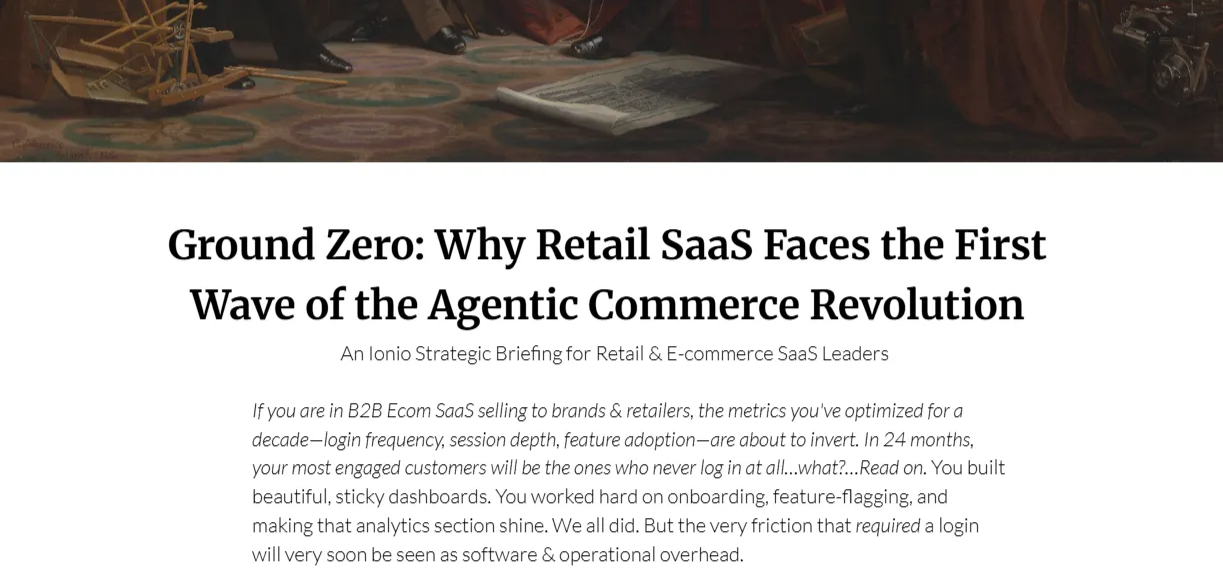
pictured, Agentic Commerce white paper #1
In it, we analyzed the trajectory of AI—specifically AI assistants (ChatGPT, Claude, Gemini)—and made a bold prediction. We predicted that "Shopping" capabilities would natively integrate into these LLMs within the next quarter.
We mapped out a world where the interface of commerce shifts from a website to a conversation. We told you to prepare for it. We told you it was coming in three months.
We were wrong. It didn't take three months. It happened in November...8 days after our release.
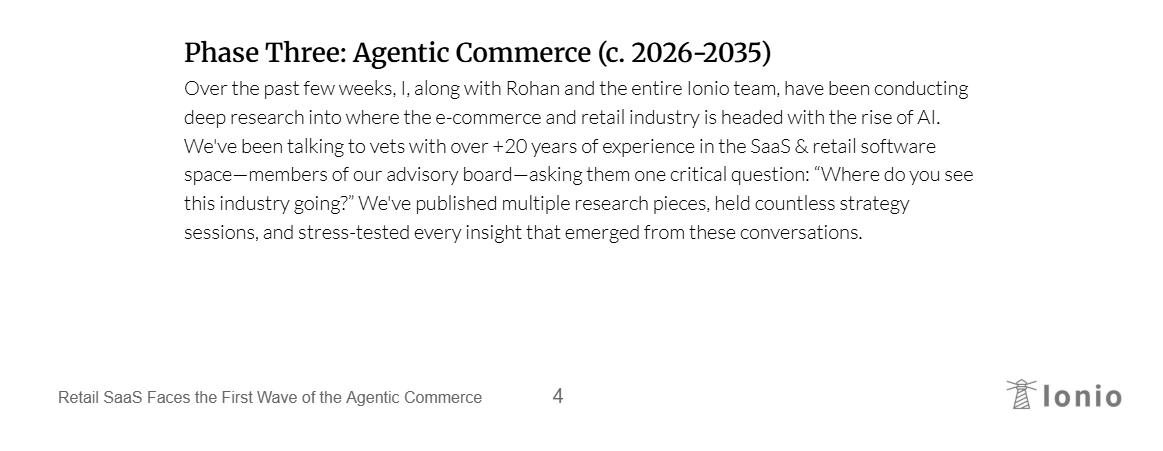
pictured, Agentic Commerce white paper #1
The timeline collapsed. The feature dropped way before expected. The shift from searching to shopping inside ChatGPT isn't a prediction—it's literally live...right now as I write this.
If that wasn't enough, while we were drafting this very document, another domino fell.
In our internal drafts, we had a section dedicated to Ads.
We argued that the natural revenue evolution for OpenAI would be "Shopping Ads"—hyper-targeted placements similar to Amazon, but conversational. We were ready to argue that this was the inevitable future.
And then, OpenAI released an update confirming exactly that. They are planning to bring in ads.
If you are a Retail or Ecom SaaS founder, or if you lead tech at a major Retail brand, you no longer have the luxury of a "wait and see" approach. The infrastructure that supports your business model is being rewritten in real-time.
It took us about four weeks to pull this together. We talked to our advisors, debated with industry vets, and argued internally for hours to make sure we got this right. Basically, if you are a merchandiser, a C-suite exec at a retail or ecom company, or a C-Suite/Product manager at the SaaS platforms powering them, this is for you. You are getting weeks of research and economic analysis compressed into a simple twenty-minute read that actually explains how the money is going to move.
So seriously, put the pen down. You don't need notes. You just need to absorb this shift to ensure you're the one growing... while your competitors are still figuring out where their traffic went.
What you'll walk away with: The mechanics of how ChatGPT Shopping Research actually works under the hood. A framework for which purchase types and price points get disrupted first. The uncomfortable math on why your CAC is about to spike—even if your ads are "working."
But here's the real payoff: The Playbook. A concrete implementation guide segmented by company stage—different moves for $1M-$10M companies, $10M-$150M companies, and $150M+ enterprises. No "hire a Chief AI Officer" fluff. No "build your own foundational model" nonsense. Just the specific leverage points that actually matter right now, based on what we've learned building this exact infrastructure.
If you want to skip straight to the implementation playbook without the buildup, jump there now.
About This Briefing
This is a public example of the exact type of work we do for retail & ecom SaaS brands in the $5M–$100M range. We think through, consult on future-proofing product roadmaps & actually research & build solutions—something we talk about day-in and day-out every single day.
We need to zoom out for a second. We aren't just telling you to watch OpenAI. That would be too easy.
Every major tech giant is rushing to own this interface, but they aren't building the same thing. They are building three very different approaches to address the same problem.
.png)
Think of this as the high-touch, unbiased consultant. It runs on brutal logic. It loves constraints. "Under $100, fits in a small apartment must be eco-friendly."
It doesn't have its own marketplace. It has to source from everywhere. That makes it the ultimate brand blind researcher. It doesn't care about your brand loyalty; it cares if you actually match the specs.
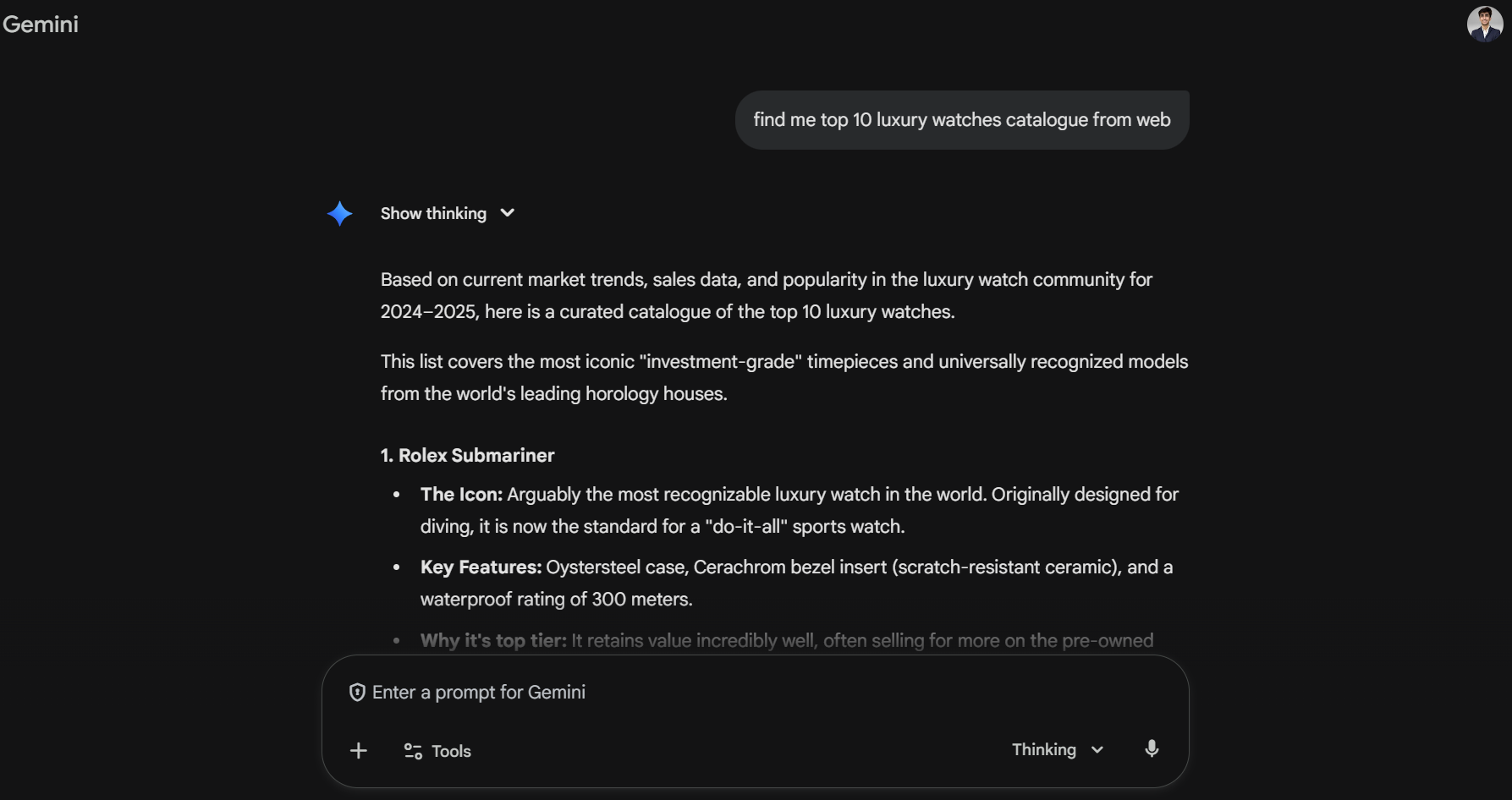
This is the "Empire Strikes Back." Google has something OpenAI doesn't: The Shopping Graph. 50 billion products. Real-time inventory. Live pricing.
The threat here isn't just intelligence; it's breadth. Google is deep in the ad game. This is where the commercial war will be fought. If OpenAI is the "Organic" play, Google is the "Pay to Play" warzone.
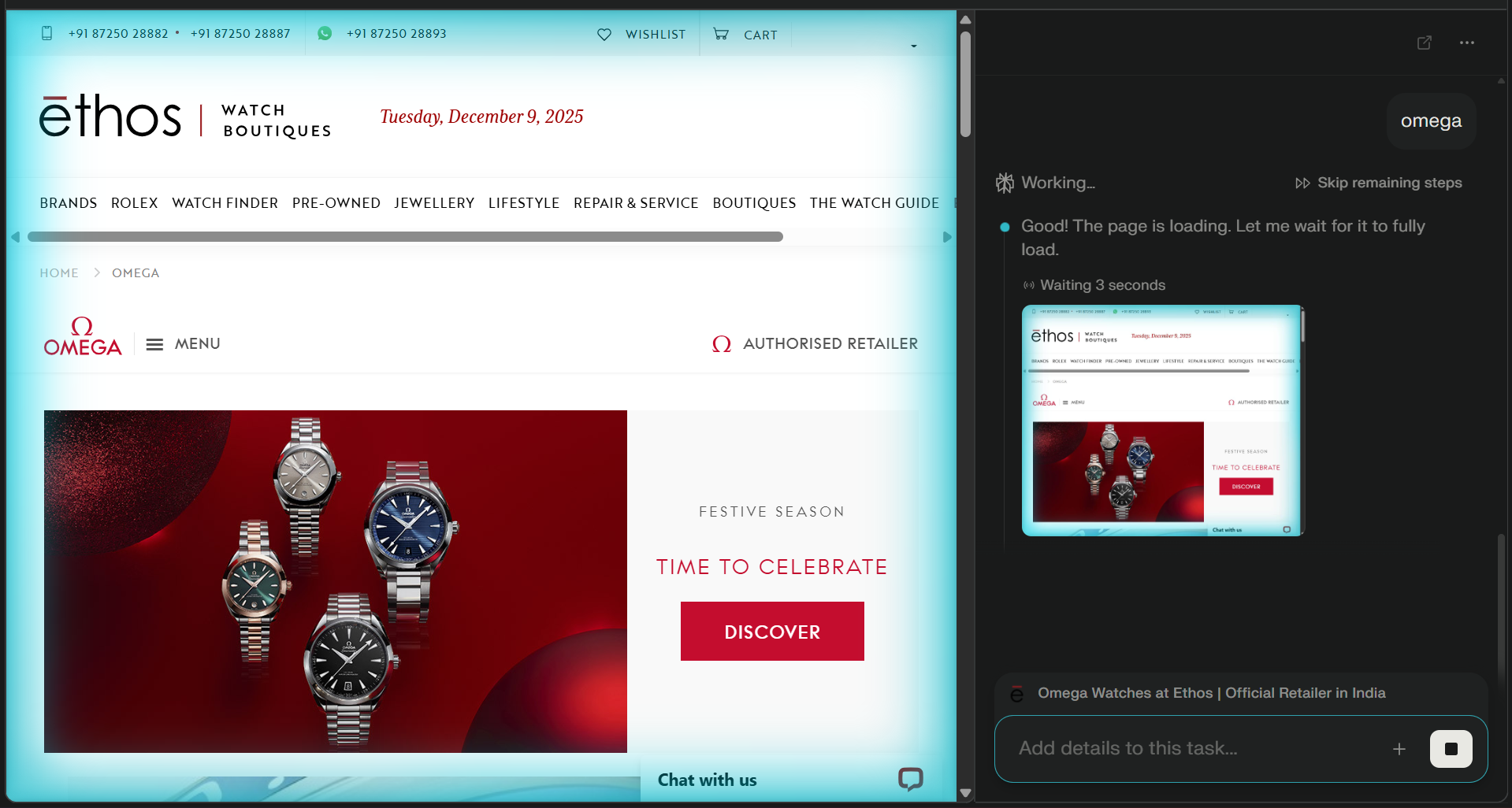
This is the wild card. The vibe here isn't "Research." The vibe is "Hands-on-Keyboard." It doesn't just want to find the product; it wants to manage the cart and place the order for you. It is aggressive. It is fast. It is already colliding with legal boundaries (just look at Amazon's recent lawsuit against them). But make no mistake—this represents the frictionless end state.
Do not, I repeat, do not try to pick a winner. They will all converge on the same end state "The AI Agent as the default Shopping UI"
For the next 24 months, your job isn't to bet on Google vs. OpenAI. It's to work on becoming a part of the Agentic Commerce Ecosystem.
PS note here, we are not saying people will never shop on amazon or ecom websites ever again…..but the starting point will change until the trust builds up in this.
You might be wondering how we can so confidently explain what is happening under the hood of a feature that just launched.
It's because we tried to build it two years ago.
.png)

.png)
In late 2023 and early 2024, our team at Ionio worked with a client to build this exact vision. We built the prototype. We saw the potential. And we hit the wall.
The vision was identical: A user says, "I need a lightweight stroller for city sidewalks," and the AI asks, "Do you have a budget? Does it need to fit in a trunk?"
We cobbled this together using the best tech available at the time—open-source LLMs, custom scrapers, without using any LLM APIs.
Product data is rarely clean. Conflicting information, incomplete variant details, inconsistencies everywhere. It's not just hallucinations, data correctness itself is a fundamental problem.
Models couldn't do function calling out of the box. Open-source couldn't match closed-source even for narrow tasks. We had to stitch together a multi-model architecture just to get basic functionality working.
The paradigm was ask a question, get an answer. Users wouldn't wait 15-20 seconds for iterative responses. We couldn't build the follow-up question logic that makes OpenAI's feature actually useful.
Users tell ChatGPT and Claude everything in confidence. A retail chatbot whose job is to sell you things? That raises red flags. The space to build standalone shopping assistants is incredibly narrow—unless you're Amazon or building on top of assistants people already trust.
OpenAI had resources to develop new accuracy metrics and fine-tune models for this task. We were stuck querying structured databases instead of letting an agent iterate toward answers.
The infrastructure has arrived. The wait is over.
This triggers a hard reset on everything we thought we knew about discovery.
You have probably heard the term GEO (Generative Engine Optimization) floating around LinkedIn for the last six months. It was pitched as the "New SEO"—the art of getting your brand cited when someone asks ChatGPT a question.
Until November, the playbook for GEO 1.0 was all about Influence Hacking.
From gaming influence to proving accuracy
We saw brands frantically trying to reverse-engineer the model's weights. They realized that LLMs trust "human" sources, so they started spamming Reddit and Quora. The goal was to trick the model into believing that everyone was talking about their product, so the AI would regurgitate a recommendation.
The problem here is that you were optimizing against a moving target.
"Every new update the model weights might shift from one source to another. This just makes you endlessly optimizing different sources without actually making any REAL progress…."
Well, ChatGPT Shopping Research just killed that strategy as well (Saved your OPTIMIZATION time on Reddit tho).
Now we have officially moved from GEO 1.0 (Influence) to GEO 2.0 (Accuracy).
ChatGPT Shopping Research doesn't care how loud you are on Reddit. It cares about a metric we call the Product Accuracy Index. And as it becomes better other models will follow along.
Here is the shift: When a user asks for a "laptop under $1,500 with long battery life for coding," the model isn't looking for the most "popular" laptop. It is looking for the SKU that has the highest percentage match against those specific constraints. It scrolls through the infinite catalog of the internet and filters by data, not hype.
First, your product specs need to be Clean. If the data isn't clear and machine-readable, you don't even make the shortlist. You simply don't exist to the model.
Then there is the review trap. This is the part that has changed the most. In the old world, you could bury a few negative comments under a mountain of five-star ratings. That game is over. If a user specifically asks for "long battery life," and three verified reviews say your battery dies at noon, the model disqualifies you. It doesn't care about your average score. It cares about the specific truth.
It validates all of this against third-party editorial lists as well, not just for the link, but to verify you are legit. And finally, it checks if you can actually deliver it. If the price is wrong or you can't ship to the user's zip code, you become invisible. It is ruthless efficiency here.
This fundamentally changes the game for everyone reading this paper. The goal is no longer "How do I spam the model's favorite forum?"
"How do I make my product the cleanest, most truthful, most consistently praised representation of a solution to this problem?"
In our first white paper, we coined a term for this: GXO (Generative Experience Optimization).

pictured, Agentic Commerce white paper #1
This is actually great news for the mid-sized players.
In the Google Ads era, the winner was usually the company with the deepest pockets who could outspend you on CPC. In the GXO era, you can beat a Fortune 500 competitor simply by having better, cleaner, and more honest data representation.
The platform that helps merchants win the "Product Accuracy" game is the platform that wins the market.
Before we dive into how ChatGPT Shopping Research rewires buying behavior, we need to take a quick detour into consumer psychology itself. 🤓…💀
Bear with me.
This might sound like theory, but it's the foundation for everything that follows. And here's a challenge while you read this: think about your own shopping habits. I'd bet 99% of every purchase you've ever made falls into one of these six categories.
I struggled to find anything that didn't.
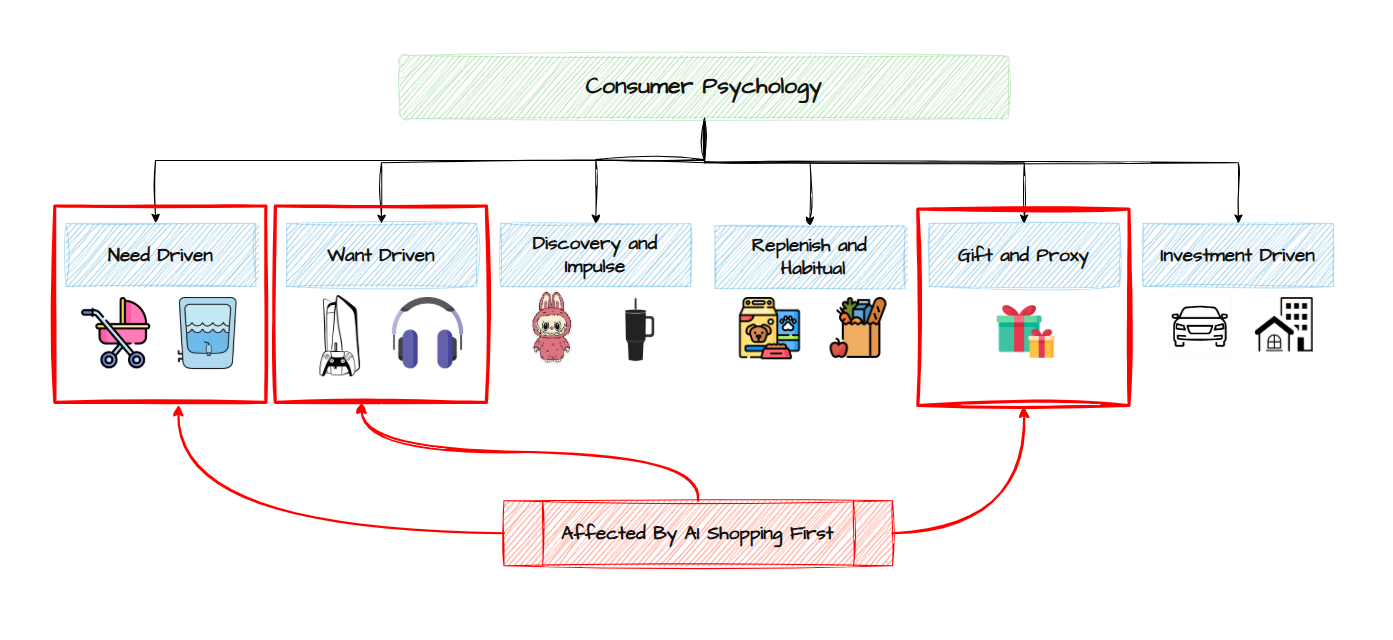
The "I know what I need" purchase.
You have a problem, you research, you buy. Water purifiers. Laptops for work. Strollers. You go from YouTube to Amazon searching for the right one.
The "I want it, but now I need reasons" purchase.
You're drawn to better headphones or a nicer monitor. The decision was emotional the moment you saw it. The research is just post-hoc justification.
The "I didn't know I wanted it until I saw it" purchase.
TikTok. Instagram. "People Also Bought." Just vibes. A subset is Social Proof and Bandwagon buying—Stanley Cups, Labubu dolls. FOMO-driven. Peer-driven.
The "I always buy X" purchase.
Groceries. Toiletries. Pet food. The goal here is zero friction—you don't want to think, you just want it in your cabinet. No research because you've bought it a hundred times before.
The "I'm buying for someone else" purchase.
This isn't same as buying for you, the constraints change, context changes, need of recommendations increase as everyone of us always have to think a lot on "What Should I Gift Them?"
The "I'm buying this to last" purchase.
Real estate. Quality tools. Index funds. The fear of regret is massive here, so you validate every detail to ensure the asset holds its value. Long time horizons. Human intervention required.
For some purchases, there's no rhyme or reason. For others, the decision is made in your brain before the card ever comes out.
Each mode has different research intensity. And that research—historically—has been scattered across Google, YouTube, Reddit, WhatsApp, comparison sites. You've been the one stitching it all together across fifteen tabs.
AI agents enter as just another tab at first. But then they climb the ladder—from "one more opinion" to "the first place I check." Why? Because one conversation can synthesize what used to take ten tabs and three hours.
Here's how the shift plays out across each mode:
Pure upside for agents. Hours of searching compressed into one guided conversation. This is where Shopping Research dominates first.
The agent becomes your post-hoc lawyer. You've already decided you want the camera. Now you ask ChatGPT to give you reasons it's worth it. The agent doesn't create desire—it armors it with logic.
Agents play defense. You see something on TikTok, paste the link, and ask: "Is this actually good or just hype?" The agent becomes a sanity check.
Eventually goes fully background. "Just keep buying me the cheapest decent toilet paper." The agent optimizes quietly. You never think about it.
Agents become research assistants with recommendation capabilities—exactly what you need when buying for someone else.
Agents become the master synthesis tool. They won't replace your multi-week decision cycle for a car. But they'll summarize the top ten reviewers, compare models against your constraints, and handle the first 80 percent so you can focus on final validation.
We have talked about technology. We have dug into the consumer psychology side of things. We are going to get to exactly what this means for your brand in a minute, but first, let's talk about the fallout.
If this shift is real (and the data says it is), it's going to break a few things. And it's going to make a few people very rich.
Here are the three massive impacts hitting the market right now.
Let's address this immediately.
In our previous drafts, we predicted this. And funnily enough, while we were writing this very sentence, OpenAI confirmed it. They are building an ad platform.
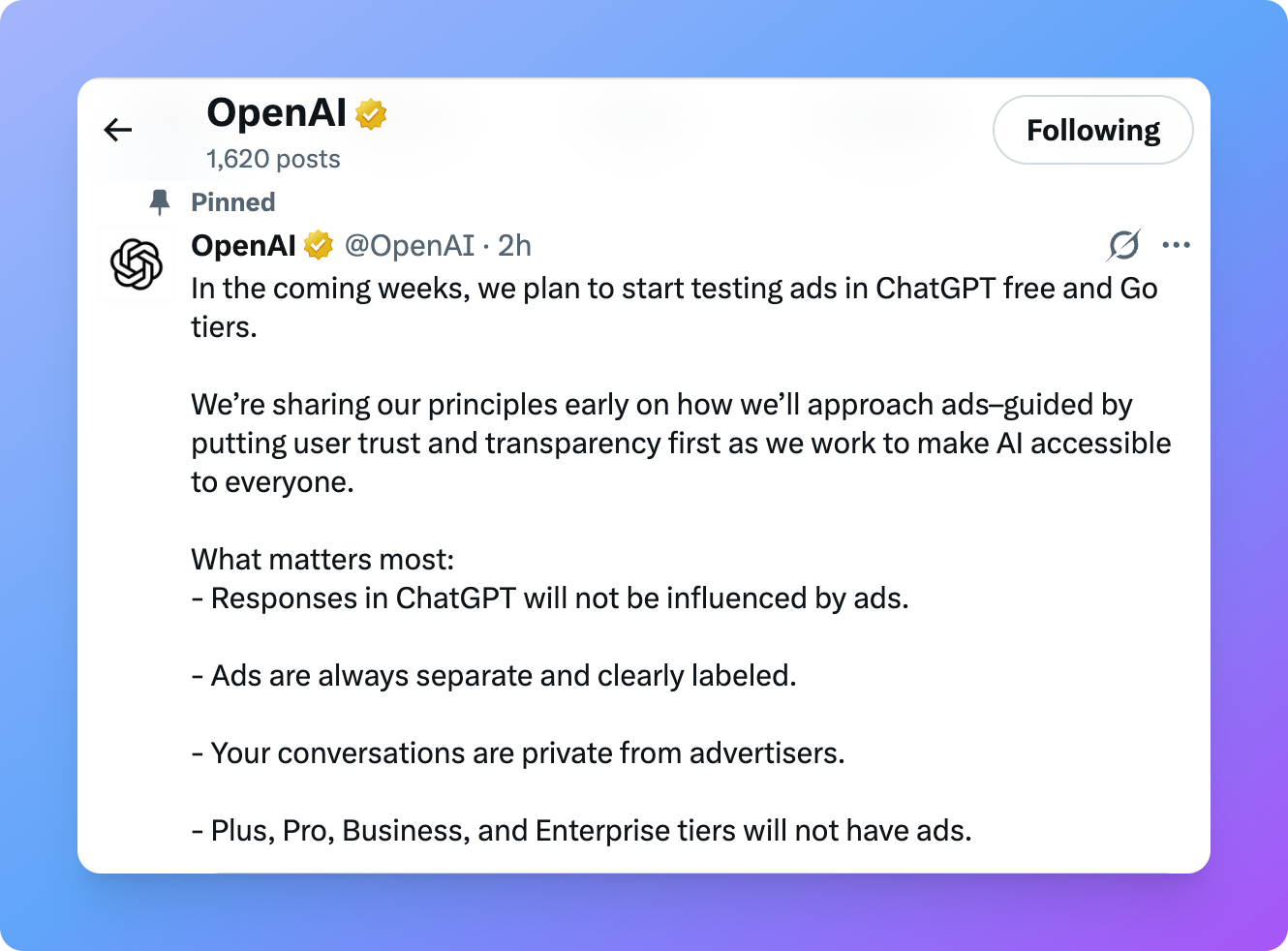
The math is simple. ChatGPT has 800 million users. Less than 5% pay for a subscription. They need to monetize the free tier.
But do not make the mistake of thinking these will be banner ads.
When you search on Google, you get ads based on keywords. They are targeted, sure. But they are often dumb. Now imagine an ad inside a conversation. The AI has context. It knows your constraints. It knows your history.
If you ask: "I need a laptop under $1,000 for a graphic design student," the AI doesn't just show you a banner for a Dell. It inserts a recommendation that fits the exact "graphic design" constraint. I feel the overall ROAS for ads would be way higher than any other platform simply because of the HYPER-TARGETING achieved by these chatbots.
If I were a Product Manager at Nosto, LimeSpot, or Criteo, I would be screaming at my product team right now. The race is on to build the integrations that let merchants plug their data directly into OpenAI's ad network.
The current filters—"Target San Francisco, Men, 25-34"—are dead. The new filters will be nuanced: "Target users asking about eco-friendly fabrics." The first marketing SaaS to unlock this "Hyper-Personalization" wins.
We are looking at this consumer shift from using search bars and manual research to completely conversation based product discovery.
Until now, online shopping was an act of manual labor.
You go to Google. You open Amazon. You open five different tabs. You check a blog. You watch a YouTube review. You check Reddit to see if the reviews are fake. This is Information Overload.
AI Chatbots kill this workflow. They compress five tabs into one answer. Consumers are already doing this. They are using Chatbots to narrow down the field before they ever click a link. But now, with features like "Shopping Research," the narrowing happens inside the discovery phase.
This is a nightmare scenario for Amazon.
Look at Perplexity's "Comet" feature. It allows users to buy directly through the chat. Amazon is already suing them. Why?
Because if the transaction happens in the chat, the user never sees the Amazon Ads. The user never gets distracted by "Sponsored Products." Amazon loses the eyeballs.
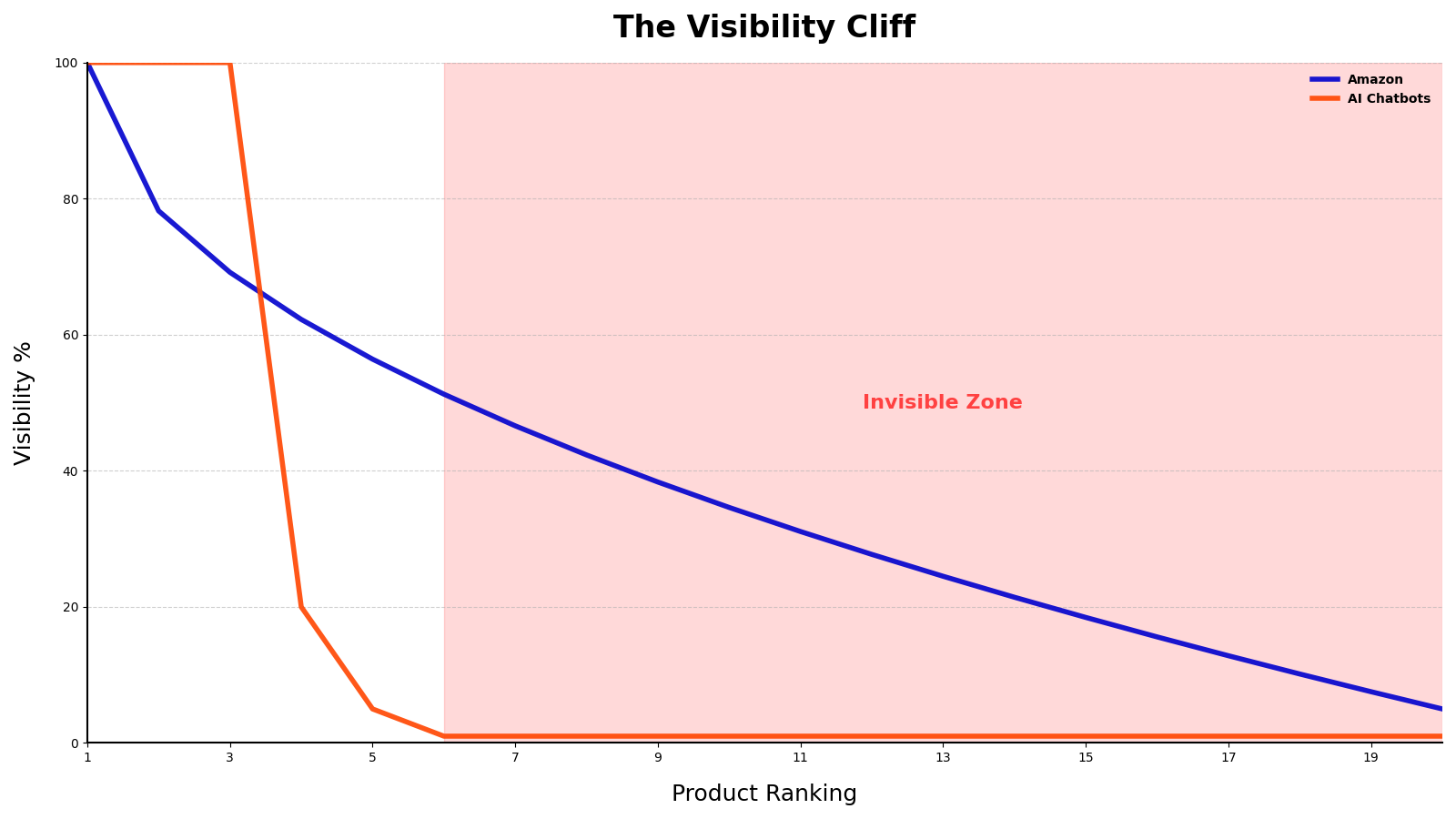
For brands, the stakes just got terrifyingly high. On Amazon, being the 14th result is okay. People scroll. On an AI Chatbot…umm.. there is no scroll. You get like 3-5 options max. You are either one of those three, or you are invisible. You are dead.
This is the new "Digital Shelf." It is smaller, tighter, and harder to get onto. This is both the biggest threat and the biggest opportunity for niche brands. You don't need to be the biggest; you just need to be the most accurate match.
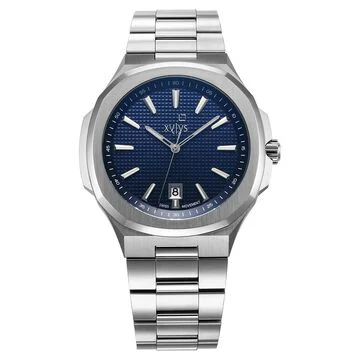
Classic Silver
$425

Petite Rose Gold
$380
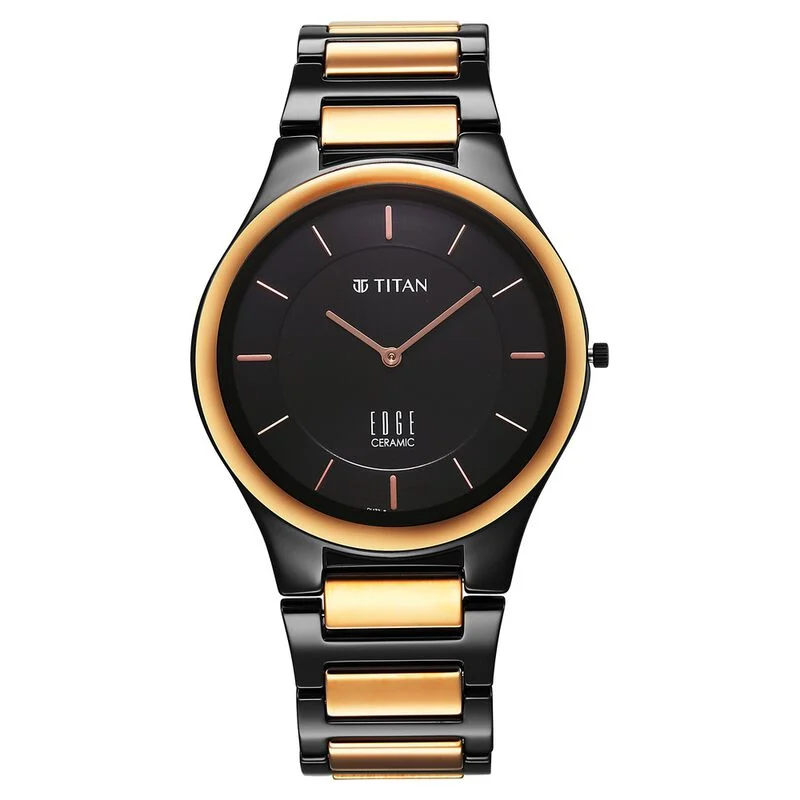
Midnight Black
$450

Heritage Brown
$395

Modern Mesh
$360
Vintage Gold
$520
The New Consumer Expectation — Personalized Guidance on Every Site
The whole AI Shopping would just spoil consumers and increase expectations so high they won't be able to do it manually again (Just how we can no more write a simple email without GPT)
Comfort is a one-way street. Once you get used to a better way of doing things, the old way feels broken. As consumers get used to the personalized experience of ChatGPT, your static e-commerce website is going to feel ancient.
If a customer spends 30 minutes clicking filters on your site to find a product, they are going to leave. They will expect your site to talk back. They will expect your search bar to understand nuance.
If you don't offer an unbiased, conversational guide, they will just tab back to OpenAI to ask for one. Here is the good news for you: Decision speed is about to skyrocket.
The "Purchase Cycle" the time between "I want this" and "I bought this" is shrinking. This all happens as we start trusting the model more and more.
If a user asks the AI for a product, buys it, and it's actually good... their trust goes up. The next time, they ask again. It works again. Eventually, they stop checking.
They just buy. The "Research Phase" evaporates. We are moving toward a high-velocity commerce world where the AI acts as the verified stamp of approval.
There lies an important factor over here, Educating the consumer - The most underrated impact is that users will be smarter. When you use Shopping Research, the AI asks you questions. "You want a Wi-Fi router? Okay, what is the square footage of your home? Are the walls brick or drywall?"
Most users never thought about wall thickness. Now they do. The AI teaches the consumer what to look for. It highlights constraints the user didn't know they had. This leads to better decisions, fewer returns, and a consumer base that actually understands what they are buying.
Hang on, where did DoorDash come from??? lol. What has food delivery got to do with this? Well, "The DoorDash Problem" is a term coined by Nilay Patel, the editor-in-chief of The Verge, and now it's floating around the tech circles... So remember it! It is a term we will use to show the Existential Crisis for these legacy marketplace platforms. Let me explain...
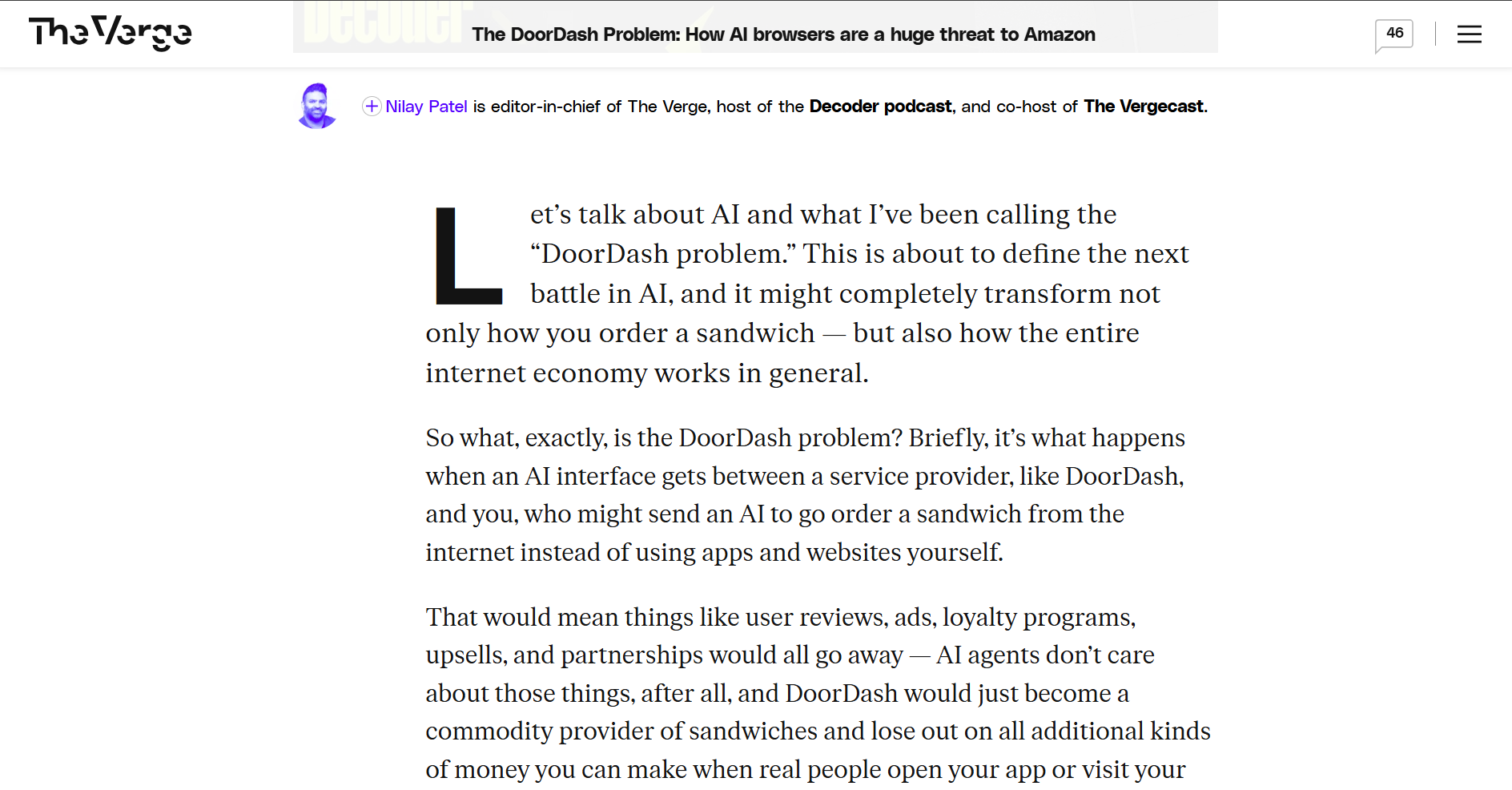
Remember your local pizza place? You called them directly. You knew the owner. Then DoorDash inserted itself between you and the kitchen—and suddenly owned the customer, the data, and the intent. The pizza place became a ghost kitchen, sweating in the backend while the app captured all the value.
AI Agents are about to DoorDash Amazon.
Right now, Amazon owns the interface. But when a user asks ChatGPT to "find the best headphones," the Agent takes control. It creates the shortlist. It picks the winner. It treats Amazon, Walmart, and Target as interchangeable backend utilities. It doesn't care which warehouse ships the box, as long as it arrives Tuesday.
This is an existential threat to Amazon specifically because of how they make money. Retail margins are razor-thin; their profit empire is built on ads—billions from brands paying to rank at the top of search results. But if I shop through ChatGPT, I never see the Amazon UI. No sponsored products. No upsells. Their highest-margin revenue stream evaporates.
Marketplaces now face a brutal bind: Block the agents, and users get annoyed—the Agent routes them to competitors who play nice. Embrace the agents, and they admit defeat as a commoditized backend.
This isn't theoretical. Amazon recently sued Perplexity over their "Comet" feature. They're not suing over copyright—they're watching a competitor try to DoorDash them in real-time.
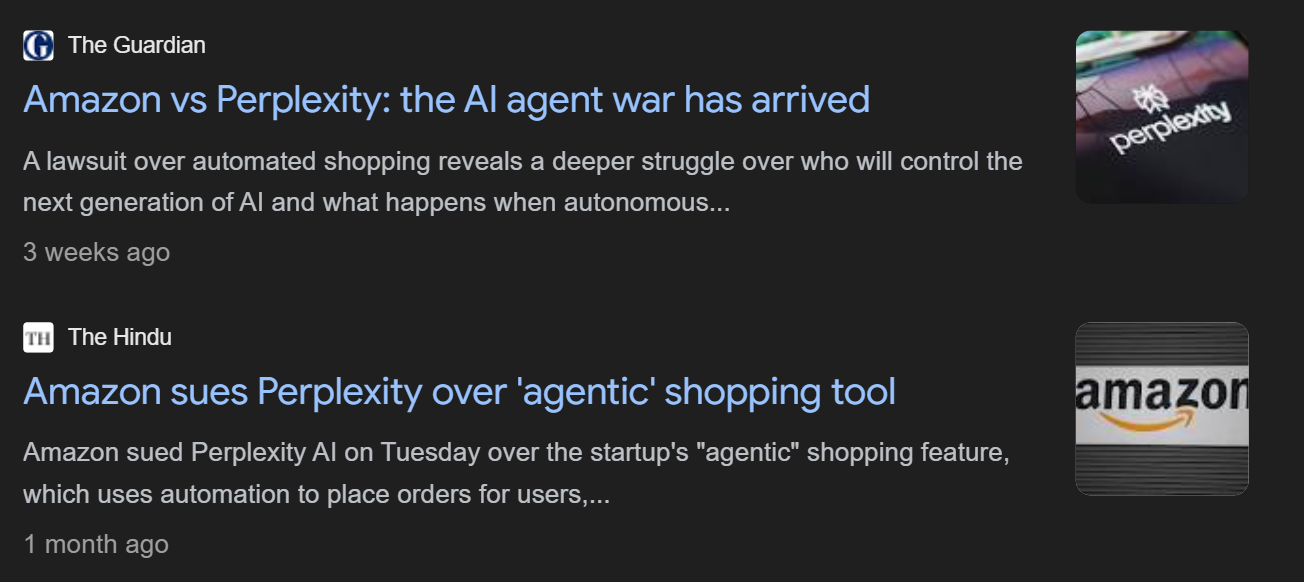
Expect a war over the next twelve months: Amazon breaking bots, AI finding workarounds, and eventually a "partner or die" phase (Walmart's already there with OpenAI).
The Verdict for Brands
If you live and die by Amazon, you're standing on a fault line. When they lose their grip on discovery, your traffic goes down with the ship. Diversify. Build your own site. The gatekeeper is changing, and you don't want an eviction notice from the new landlord.
Your strategy depends on your scale — choose wisely
First, a warning. As this shift accelerates, a legion of agencies and consultants will descend upon you. They will sell you complexity because complexity bills by the hour. They will tell you to "train your own foundational model" or "build an in-house competitor to ChatGPT."
Do not do this. For 99% of brands, becoming an AI research lab is a distraction that will bleed your cash flow dry. Beware of false prophets selling you roadmaps for terrain they have never navigated. You do not need a GPU farm; you need leverage. The only "AI Strategy" that matters right now is making sure your existing stack—your PIM, your reviews, your feeds—is fluent in the language of agents. Don't build the Shopping Researcher; just make damn sure the Researcher can read you clearly.
This brings us to the "AI Slop" reality. The internet is about to get very messy. We are already seeing an explosion of AI-generated "best of" lists and fake reviews designed to game the models. But here is the counter-move: Radical Truth. The models are being trained to down-rank this sludge. They are hunting for high-integrity signals—structured schema, verified reviews, and consistent specs across the web. Your job isn't to out-spam the bots; it is to be the signal in the noise. While your competitors are trying to "hack" the algo with 10,000 AI-written blog posts, you win by having the cleanest, most machine-readable catalog on the market.
So, what is your actual move? It depends on your scale.
#1
The "Reality Wins" Strategy
Relax.
Seriously. Do not hire a Chief AI Officer. Do not burn cash fine-tuning Llama-3 in your basement. At this stage, your greatest asset is agility and truth. Focus entirely on Product Market Fit and gathering genuine, high-quality customer love (reviews, UGC, social proof).
Why?
Because the AI agents are optimized to find "Signal." If your product is genuinely great and real humans are talking about it, the agents will find you. You don't need to game the system; you just need to feed it the truth.
Your Action
Polish your reviews. Fix your schema. Keep your product great.
#2
The "Leverage" Strategy
Experiment.
You are in the messy middle. You are too big to manage your data manually, but you don't want to burn cash on a massive R&D lab. You need leverage. Push your SaaS vendors hard. If your PIM or CRM isn't giving you AI tools to clean your data, switch vendors. Ensure your feeds are structured. Use AI to automate the "boring stuff"—cleaning catalogs, tagging images, answering Tier-1 support tickets.
The Pivot: Most mid-caps will stop here. They will survive. But if you are a brand in the mid-market that refuses to settle for "survival"—if you have the capital and the guts to be The Category King—then ignore this advice and look at the Large Cap strategy below. You don't have to wait to be big to act big.
You need to take care of exactly these 3 things:
Brands are terrifyingly blind right now; they suspect they are invisible to ChatGPT, but they have no way to prove it. You need to build the tool that tells them the hard truth. Imagine a dashboard that simulates thousands of nuanced customer queries—from "Is this lipstick gluten-free?" to "Best running shoe for flat feet?"—and reports exactly how often the brand appears in the AI's answer versus their competitors. You aren't just selling another analytics dashboard here; you are selling survival. You are giving them the only metric that matters in the new world: "Am I part of the conversation?"
There is a massive divide in data quality right now. Modern DTC brands usually have clean feeds, but legacy retailers are sitting on a nightmare. A retailer with 100,000 SKUs typically has messy, unstructured legacy data that an AI agent simply cannot read or reason about. The opportunity is to build an ingestion engine that intakes that chaotic catalog and uses LLMs to clean, tag, and restructure it into the strict "Product Spec Protocol" that OpenAI and Google crave. By building this pipelines, you become the essential bridge between their dusty warehouse and the modern AI customer.
The biggest risk for a brand today isn't just losing traffic; it's the "Bounce Back." A customer asks ChatGPT for advice, clicks a link, lands on a generic homepage, feels lost, and bounces right back to the bot. To fix this, you need to build an on-site agent that actually carries the context from the referral. If a user lands from a query about "camping gear for cold weather," your site should instantly welcome them with winter sleeping bag recommendations, not a generic banner. This solves the continuity gap and saves the sale.
#3
The "War Room" Strategy
At this scale, the threat isn't external, it's internal. Marketing holds the data, Tech owns the tools, Product has the vision, but none of them are talking. You need an AI Strike Team: a small, cross-functional unit that reports directly to you, not to department heads — with the mandate to move through every department and ship working solutions in 30 days.
Here's who you need on this team.
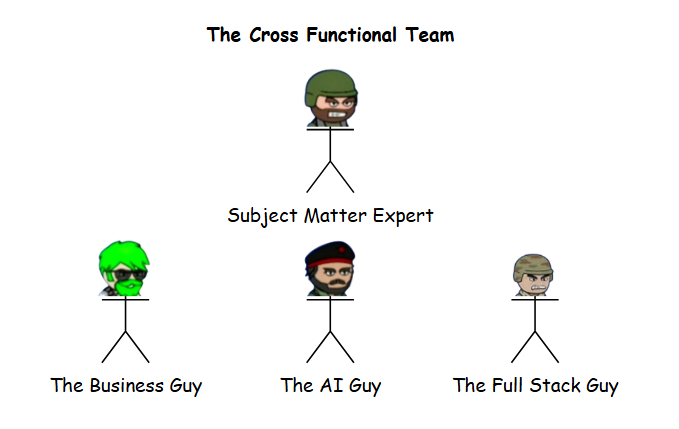
pictured, AI Strike Team composition
First, a Subject Matter Expert — someone who's been at the company 3-5 years and knows where the bodies are buried. Not an executive who hasn't touched real work in years; someone from middle management who recently had their hands dirty.
Second, an AI Engineers — but not someone who just discovered ChatGPT in 2024. You need someone who's built RAG systems, trained models, and understands AI beyond chatbot wrappers.
Third, a Business Guy— someone obsessed with ROI who can connect "we automated this task" to "this increases margin by 15%." They make the case to skeptical department heads.
Fourth, Full-Stack Developers — generalists who ship. Not architects, not specialists. Builders who can turn a prototype into something people actually use in 48 hours.
Finally, the team needs direct access to the CEO. When a department head resists because "my team will complain," this team needs air cover to push through.
The playbook is simple. Pick your most broken department. Get the people who actually do the work in a room with a whiteboard. Map the real workflow — not the SOP version. Find the time to sink. Before building anything custom, check what AI already exists in your current tools. Then build ugly and fast: a script, a Retool app, something that proves value in days. When it works, move to the next department. Rinse, repeat.
Yes, this is expensive. Building this team in-house means a Product Manager ($150K–$200K), an AI Engineer ($200K–$300K), two Full-Stack Developers ($150K each), and a Business Analyst ($150K). That's $750K–$1M in annual salary before benefits, tools, or overhead. Then there's the CEO and CTO time this team will demand - weekly syncs, air cover when department heads resist, strategic direction. And the timeline: 3 months to hire, 2 months to onboard, 6 months to ramp. You're looking at a year before real output. It's absolutely doable—and for companies with the runway and patience, it's the right long-term play.
Here's the uncomfortable truth: every month you delay, someone in your category is getting faster. The talent pool is shrinking and getting pricier. You can build this team internally, and you should try, we've handed you the blueprint.
We deliver in a quarter what takes most companies a year, at a fraction of the cost. The team is already assembled—you're not paying for a 12-month hiring cycle.
The boilerplates already exist from dozens of e-commerce and SaaS implementations — you're not paying for us to figure it out. The mistakes have already been made—you're not funding our learning curve. Our advisory board of operators, ICs, and founders pressure-tests everything we ship. We're not here to hand you a deck. We move faster than your org chart allows and show ROI in 90 days.
Next Step
30 minutes. No deck. We'll talk through your challenge, share relevant work, and see if it makes sense to work together.
Book an Intro Call →Prefer email? contact@ionio.ai · Or connect with Rohan on LinkedIn
— Okay, the paper is over. But if you're still here... —
A peek into the chaos of writing this thing
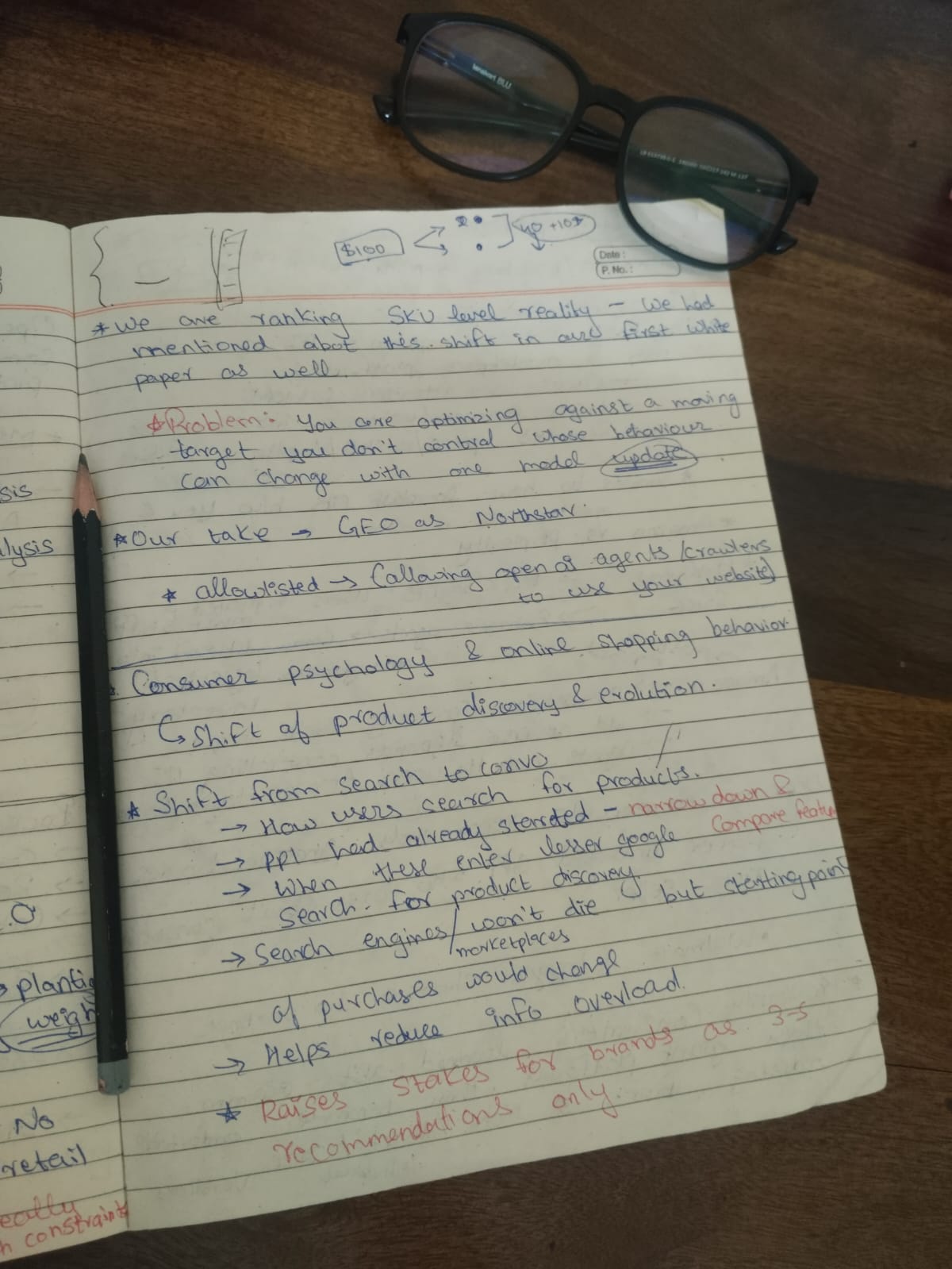

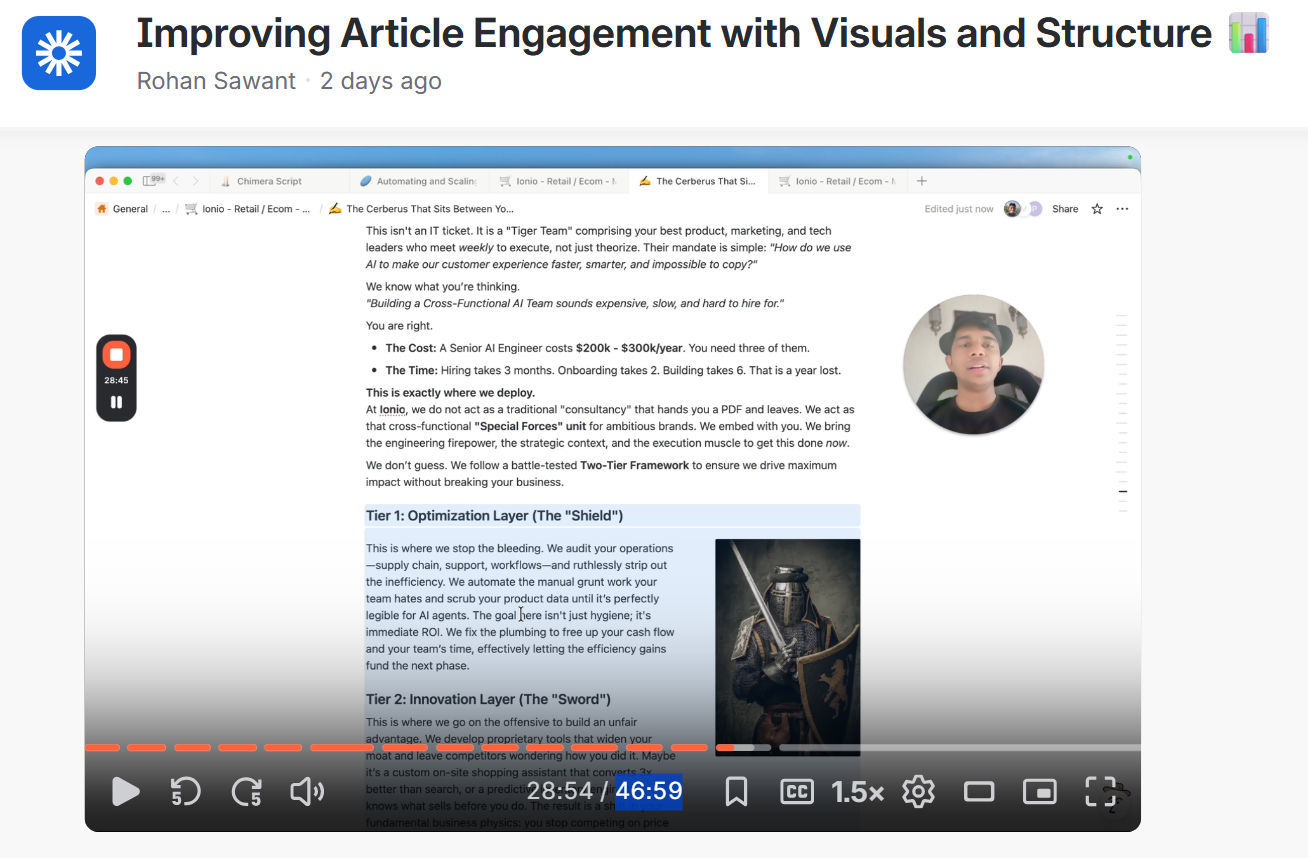
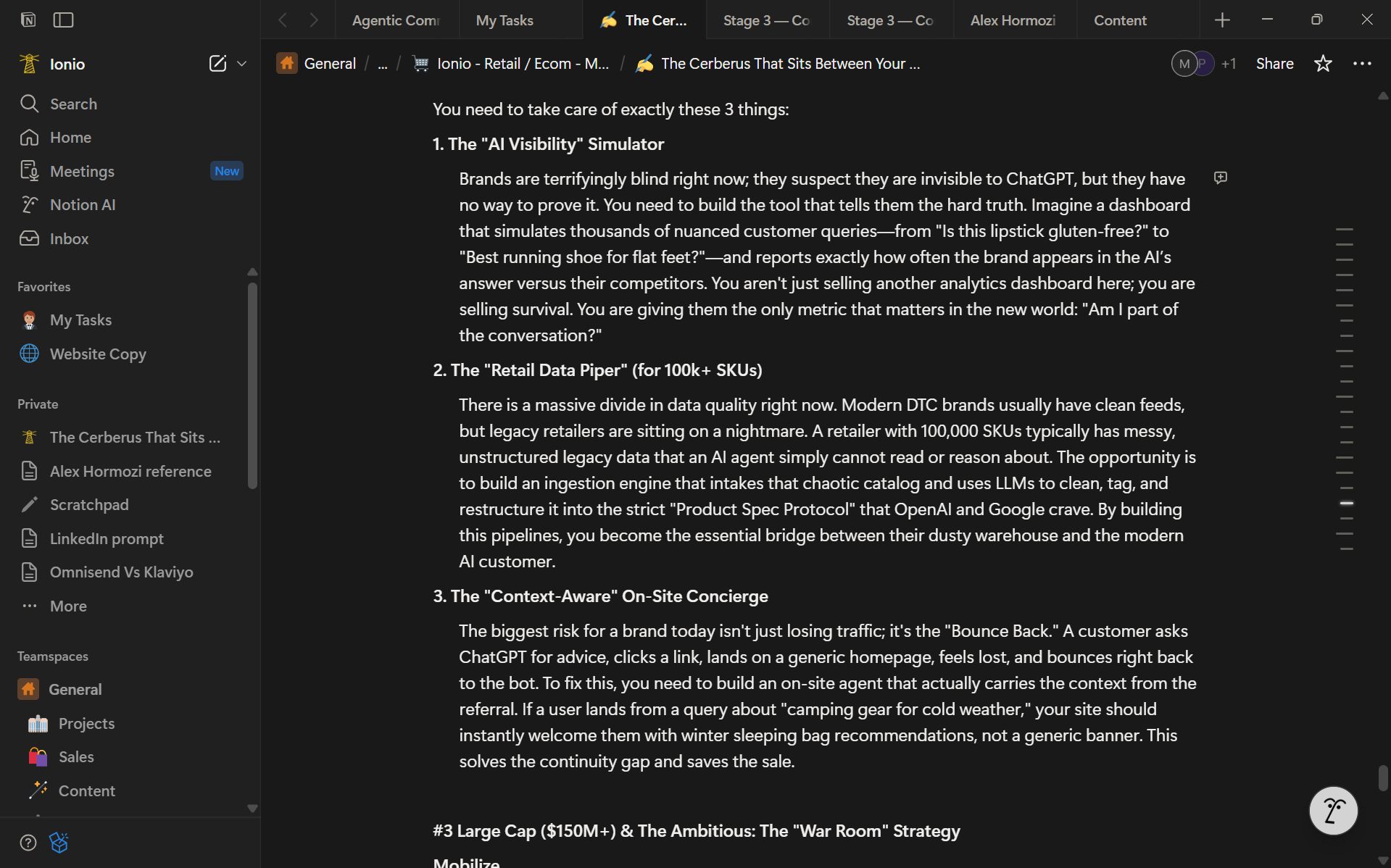
.png)
PS
This is how we collaborate at Ionio. This is my boss ROHAN dropping a fucking 50 Min Loom to just review this piece of article...... GOD BLESS HIM 🫡